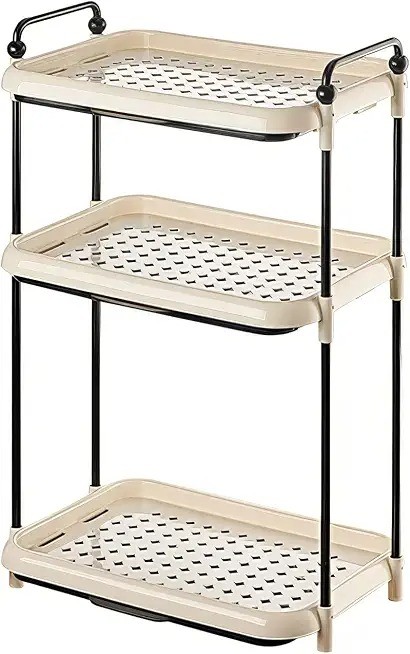
Almost every returned shelf comes back for the same reason: it did not fit. Not because the listing was wrong, but because the measurement was taken in the wrong place.
Measure the narrowest point
A hallway is not one width. It is the width at the skirting board, the width at the door frame, and the width between the door handle and the opposite wall. The number that matters is the smallest of those, and it is usually 5–8 cm less than the number people quote.
Measure depth at floor level
A unit 35 cm deep will not sit flush against a wall if there is a 12 mm skirting board and a radiator pipe. Either leave a gap — and accept that things will fall down it — or measure the depth from the skirting face, not the wall.
Check the diagonal
If the unit arrives assembled or you are moving it through a doorway, the diagonal is the real constraint. A 180 cm tall bookcase will not pass through a 200 cm door unless you tip it — and when you tip it, its footprint becomes its height. Draw it on paper. It takes two minutes.
Then add 2 cm
Walls are not straight and floors are not level. Whatever you measured, assume the real opening is 2 cm tighter. If the unit only fits at exactly the measured width, it does not fit.